Bedding has an outsized effect on everyday dorm life. The right sheet size, a comfortable sleep surface, and layers that suit the room’s temperature matter more than decorative extras.
The problem is simple but surprisingly common: most students buy regular Twin sheets for a Twin XL mattress. A standard Twin mattress is 75 inches long. A Twin XL is 80 inches. Those extra 5 inches mean your fitted sheet will pop off the corner by week two, your flat sheet will leave your feet exposed, and you will spend the semester tucking and retucking fabric that was never designed to fit.
Quick Answer
Buy Twin XL fitted sheets with 12 to 16 inch deep pockets, a 2-inch gel memory foam mattress topper, a full or queen comforter for the top layer, and two down-alternative pillows. Skip the flat sheet and use a duvet cover instead. Regular Twin sheets will not fit a Twin XL bed.
Key Takeaways
• Twin XL mattresses are 38 x 80 inches — 5 inches longer than standard Twin.
• Only fitted layers need to be Twin XL. The comforter can be full or queen.
• Consider a 2-inch gel memory foam topper if the supplied mattress feels too firm.
• Cotton percale is best for hot sleepers; microfiber is softer out of the package.
• Buy two sets of fitted sheets so you always have a clean set in rotation.
Twin XL Sizing: What You Need to Know
Twin XL (short for Twin Extra Long) is the standard mattress size in college residence halls across the United States. It measures 38 by 80 inches—the same width as a regular Twin, but five inches longer. That difference is why regular Twin fitted sheets don’t work.
Bedding Size Guide
Fitted sheet: Must be Twin XL with 12 to 16 inch deep pockets. A regular Twin fitted sheet will be too short and pop off the corners. A full fitted sheet will be too wide and bunch up.
Flat sheet: Can technically be any size, but most students skip the flat sheet entirely and use a duvet cover instead.
Duvet cover: Choose Twin XL or oversized Twin. A standard Twin duvet insert will leave a few inches of empty cover at the end.
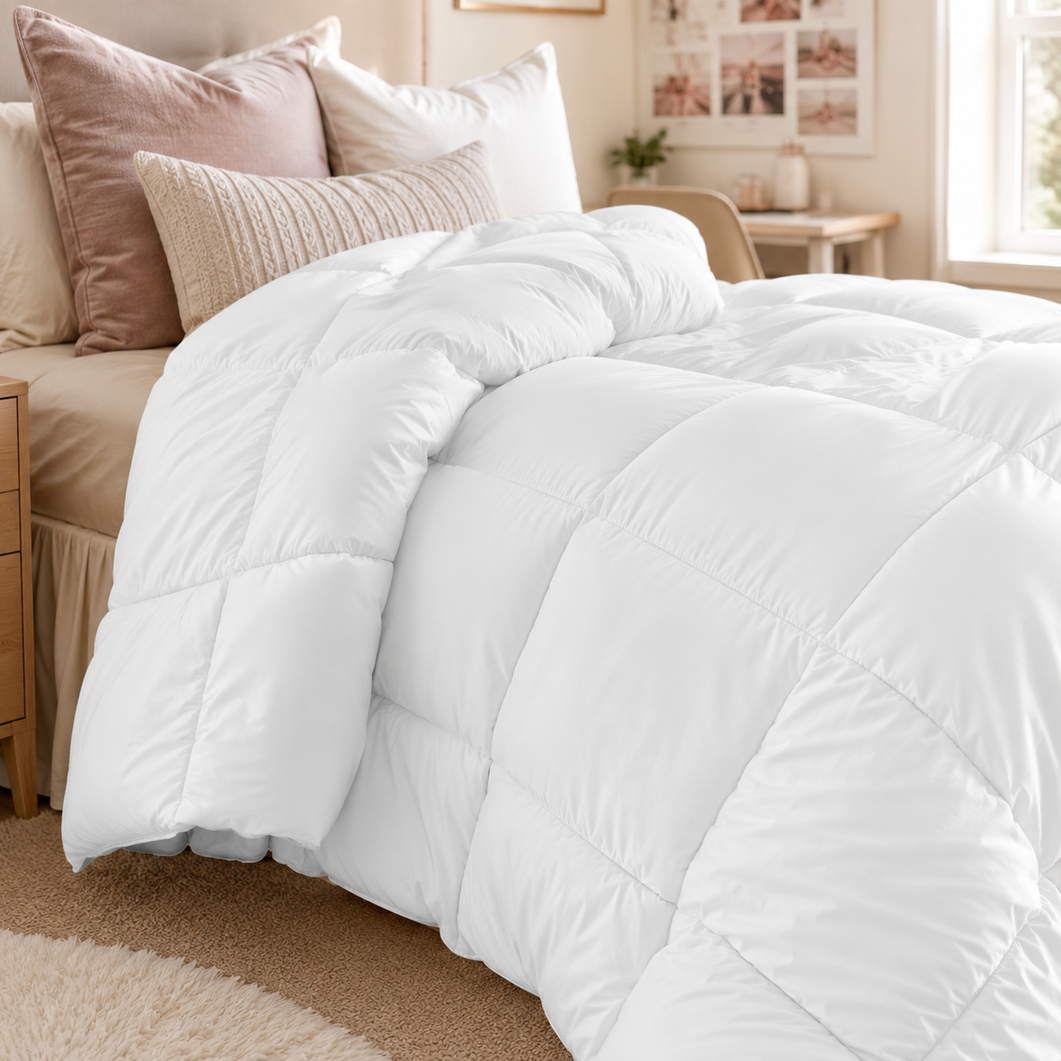
Comforter: Full or queen size works best on a Twin XL bed. It adds drape, covers the bed frame, and makes the bed look fuller and more styled.
Mattress topper: Must be Twin XL. A topper should sit directly on the mattress without hanging over the edges.
Mattress protector: Must be Twin XL. It needs to wrap the mattress and topper together.
Bed skirt: Twin XL with a 14-inch drop for standard dorm bed height. Go up to 18 to 24 inches if your bed is lofted.
Fitted Sheets: The Non-Negotiable Purchase
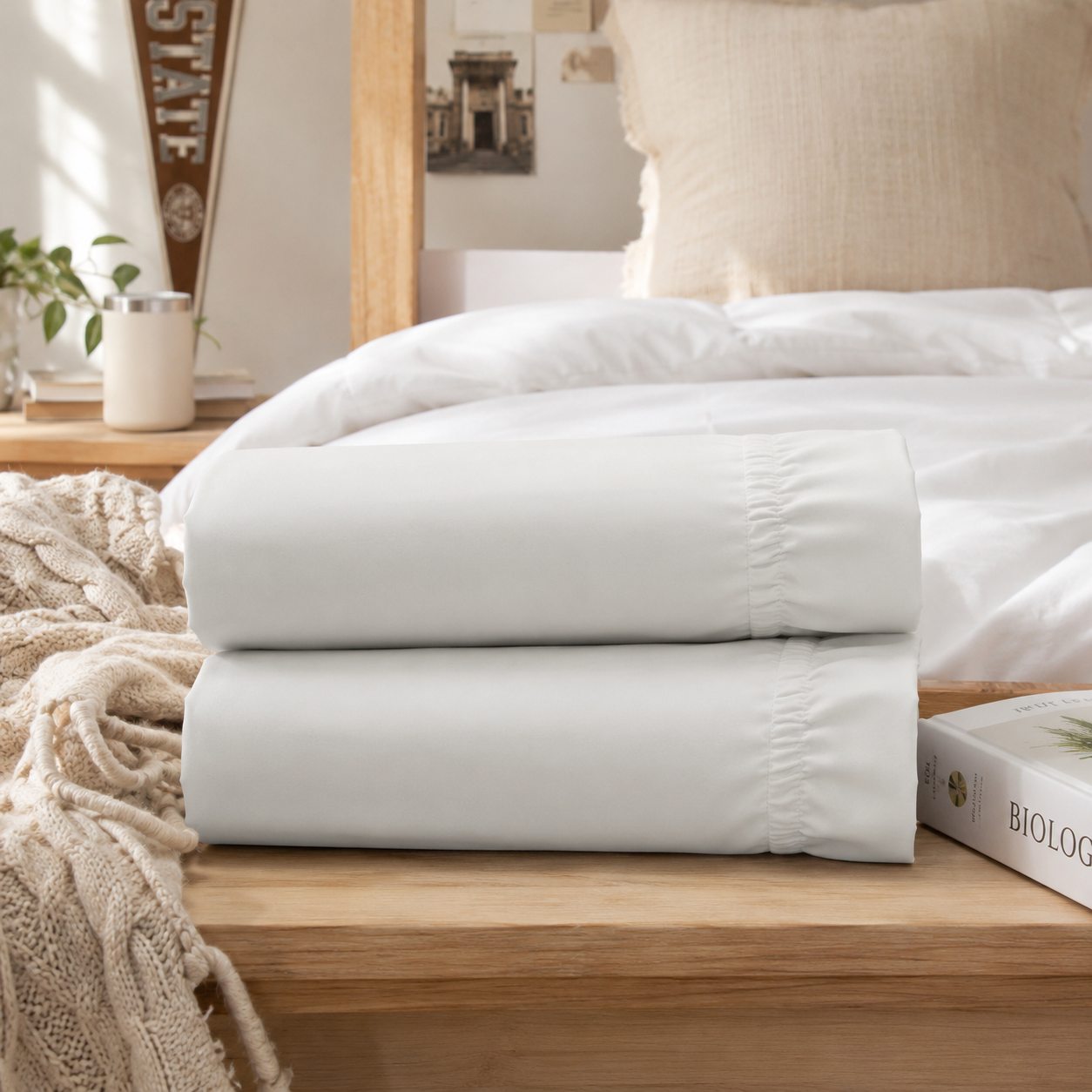
This is where most people go wrong. A fitted sheet for a Twin XL mattress needs deep pockets — ideally 12 to 16 inches — because dorm mattresses tend to be thicker than standard ones, especially if you add a mattress topper (which you should). Look for sheets labeled specifically "Twin XL Fitted" with pocket depth listed in the product description.
The best material for dorm sheets is a toss-up between cotton percale and microfiber. Cotton percale is crisp, breathable, and gets softer with every wash. It is the better choice if you run hot at night. Microfiber is softer right out of the package, resists wrinkles, and dries faster in dorm dryers — which matters more than you think when you are doing laundry in a basement with 20-minute dry cycles.
Flat Sheets vs. Duvet Covers: Pick One
You do not need both. A flat sheet adds a layer between you and your comforter, which is nice in theory but becomes one more thing to wash and one more thing to untangle. A duvet cover with a soft insert inside is the simpler, more versatile option. You can wash the cover easily, switch it out for a new look mid-year, and it adds warmth without bulk.
If you go the duvet route, make sure your insert is sized for Twin XL or at least labeled "oversized Twin." A standard Twin duvet insert will leave a few inches of empty cover at the end, which looks sloppy and feels cold on your feet.
The Mattress Topper Is Non-Negotiable
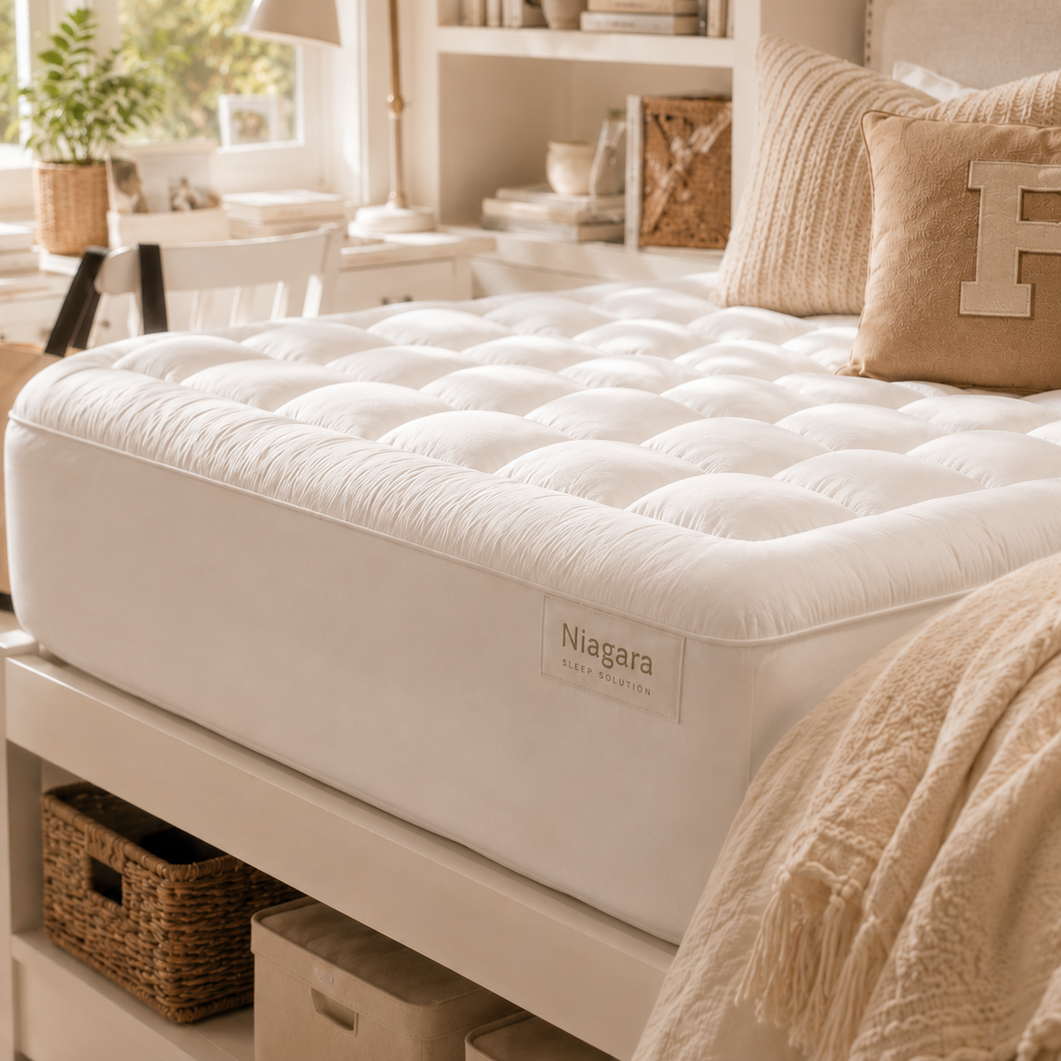
Dorm mattresses are, without exception, firm. They are designed to last four years of heavy use, not to cradle you into a restful sleep. A good mattress topper transforms the bed from institutional to comfortable.
Memory foam toppers are the most popular choice for a reason: they conform to your body, relieve pressure points, and make a firm mattress feel plush. A 2-inch topper is the sweet spot for dorms — thick enough to make a real difference, thin enough to fit under your fitted sheet without warping.
Gel-infused memory foam is worth the small upgrade if your dorm does not have air conditioning. Standard memory foam traps heat. Gel foam dissipates it. You will sleep noticeably cooler, especially in August and September when dorm rooms feel like greenhouses.
Pillows: Two Is the Right Number
One pillow for sleeping, one for propping yourself up while studying in bed. Down alternative is the practical choice — hypoallergenic, machine washable, and affordable. Look for a medium-density pillow for sleeping (soft enough to be comfortable, firm enough to support your neck) and a firmer pillow or a reading pillow for your backrest.
The Comforter Question
If you are using a duvet cover, you do not need a separate comforter. But if you prefer the traditional route, a Twin XL comforter is essential. Avoid "one size fits all" comforters labeled "Twin/Full" — they are always too wide and too short for a Twin XL bed.
For fill, down alternative wins again. It is warm, lightweight, washes well, and will not trigger dorm allergy policies. A medium-weight comforter works for most climates, especially if you layer with a throw blanket in winter.
A Word on Bed Skirts
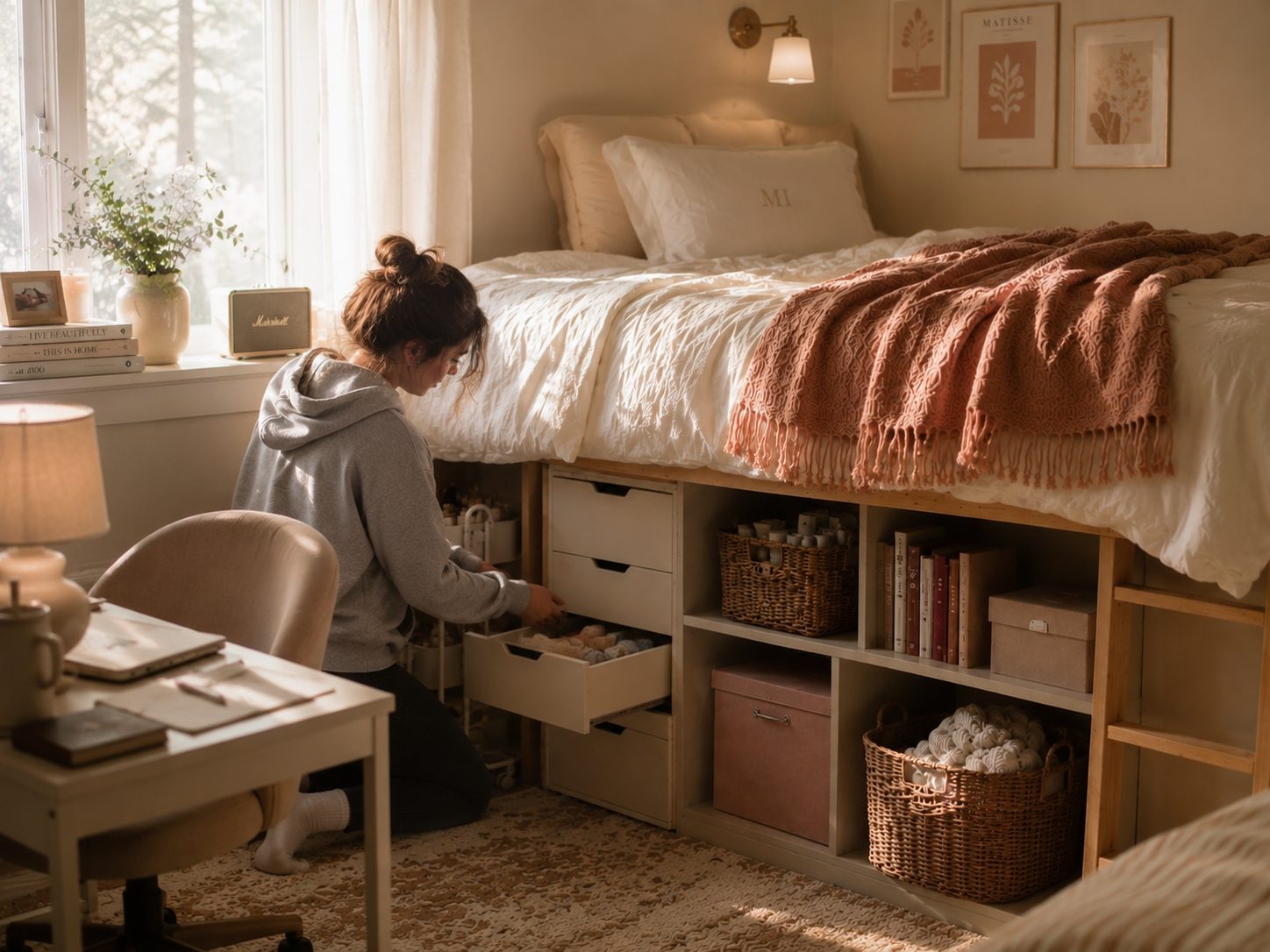
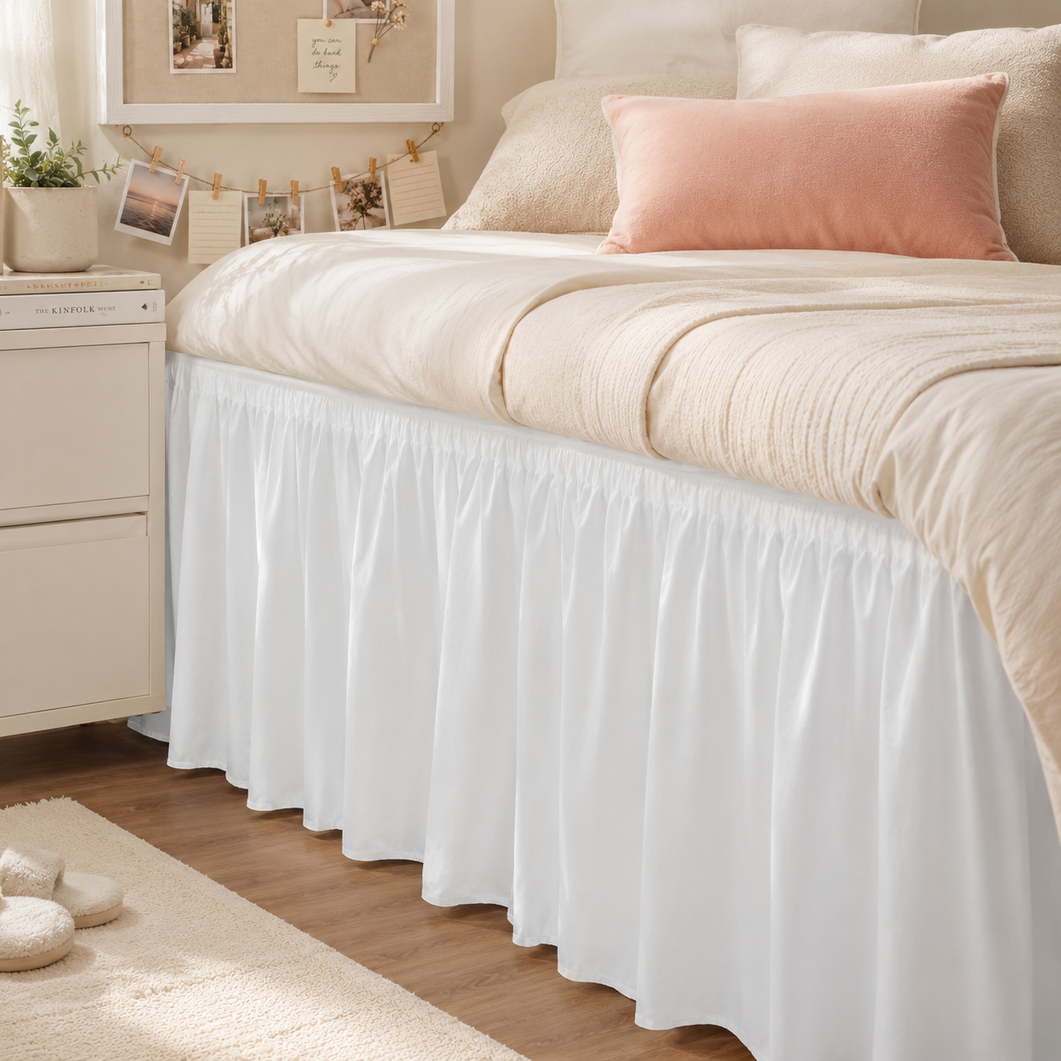
Bed skirts serve two purposes in a dorm: they hide the storage space under your bed (which you will use) and they make the room look finished. A Twin XL bed skirt with a 14-inch drop fits most dorm bed frames on their standard setting. If you loft your bed, you will need a longer drop — 18 to 24 inches — or a tailored bed skirt designed for lofted frames.
Commonly Forgotten Bedding Items
Most students remember sheets and a comforter but forget: a mattress topper (the most important item), a second set of fitted sheets for laundry day, a mattress protector (keeps the topper clean and dry), a bed skirt (hides under-bed storage), and pillowcases that match the sheets (two sets, minimum).
The One Thing to Skip
Top sheets. In a dorm setting, they are more trouble than they are worth. They tangle, they slide, and they add one more item to your already-annoying laundry routine. Use a duvet cover instead. Your future self will thank you when you are hauling laundry down three flights of stairs in February.
Dorm Styler Tip
Buy your fitted sheet, mattress topper, and mattress protector all from the same brand when possible. Different brands size their "Twin XL" slightly differently, and a mismatch between topper thickness and sheet pocket depth is the most common cause of sheets that pop off in the middle of the night.
Common Bedding Mistakes
Buying regular Twin sheets
A regular Twin fitted sheet is 75 inches long. A Twin XL mattress is 80 inches. Those five inches mean the sheet will pop off the corners within the first two weeks.
Choosing a comforter without checking dimensions
Comforter labels vary by brand. A 'full' from one brand may be 82 x 86 inches, while another is 88 x 92. Always check the actual measurements before buying.
Skipping the mattress topper
A topper can make a firm dorm mattress more comfortable without replacing the whole bedding set. Choose the thickness and material based on the student’s sleep preferences, mattress depth, and housing rules.
Buying only one set of sheets
You will not want to do laundry the exact moment your only set gets dirty. Two sets means you always have a fresh bed while the other is in the wash.
Related Reading
• Can You Use a Full/Queen Comforter on a Twin XL Bed — Why sizing up your comforter makes sense.
• Best Twin XL Bedding — Curated product recommendations.
• Dorm Room Shopping List for Moms — Complete organized checklist.
• Cozy Neutral Dorm Room Ideas — Bedding that works with a warm neutral palette.