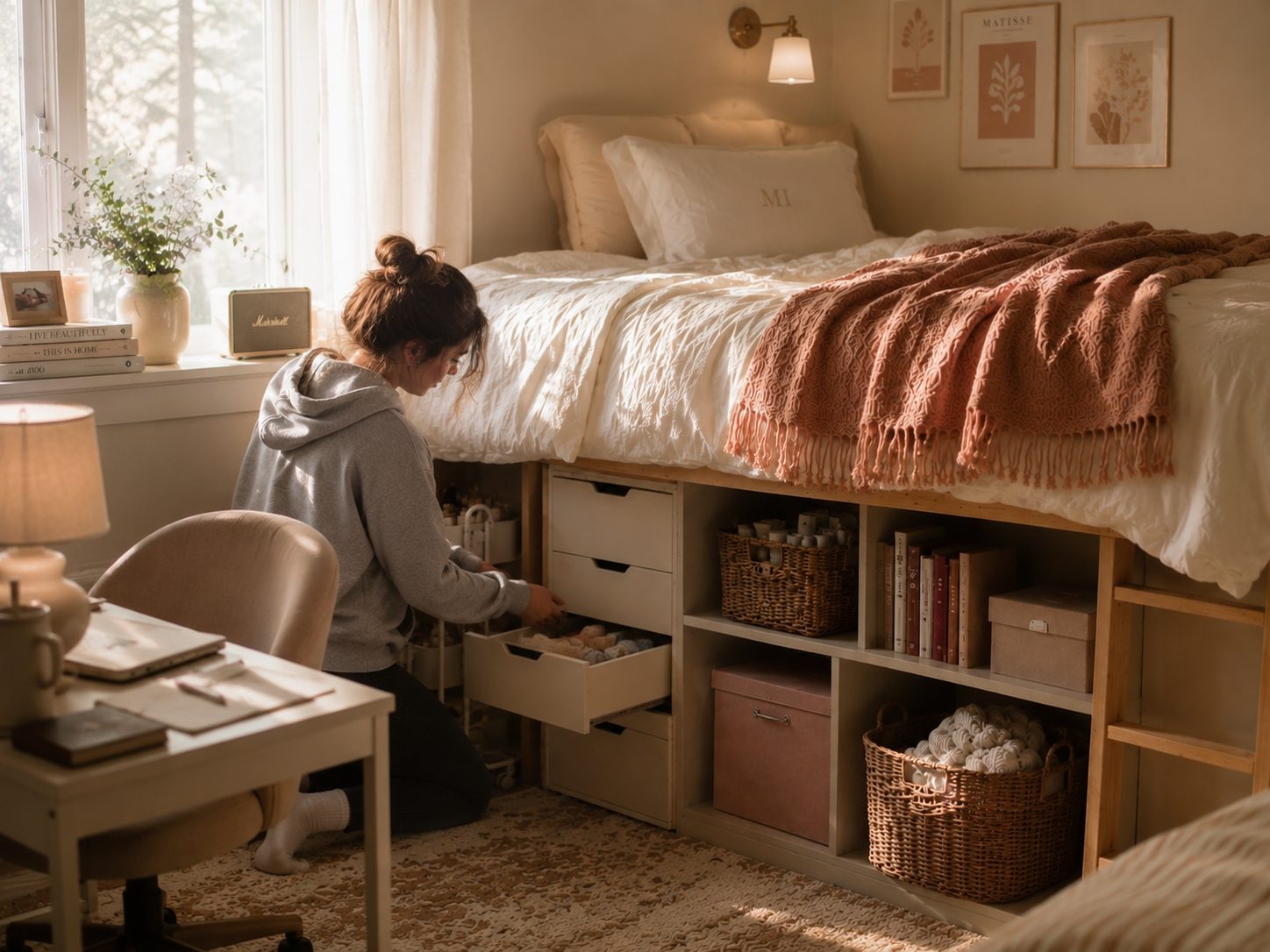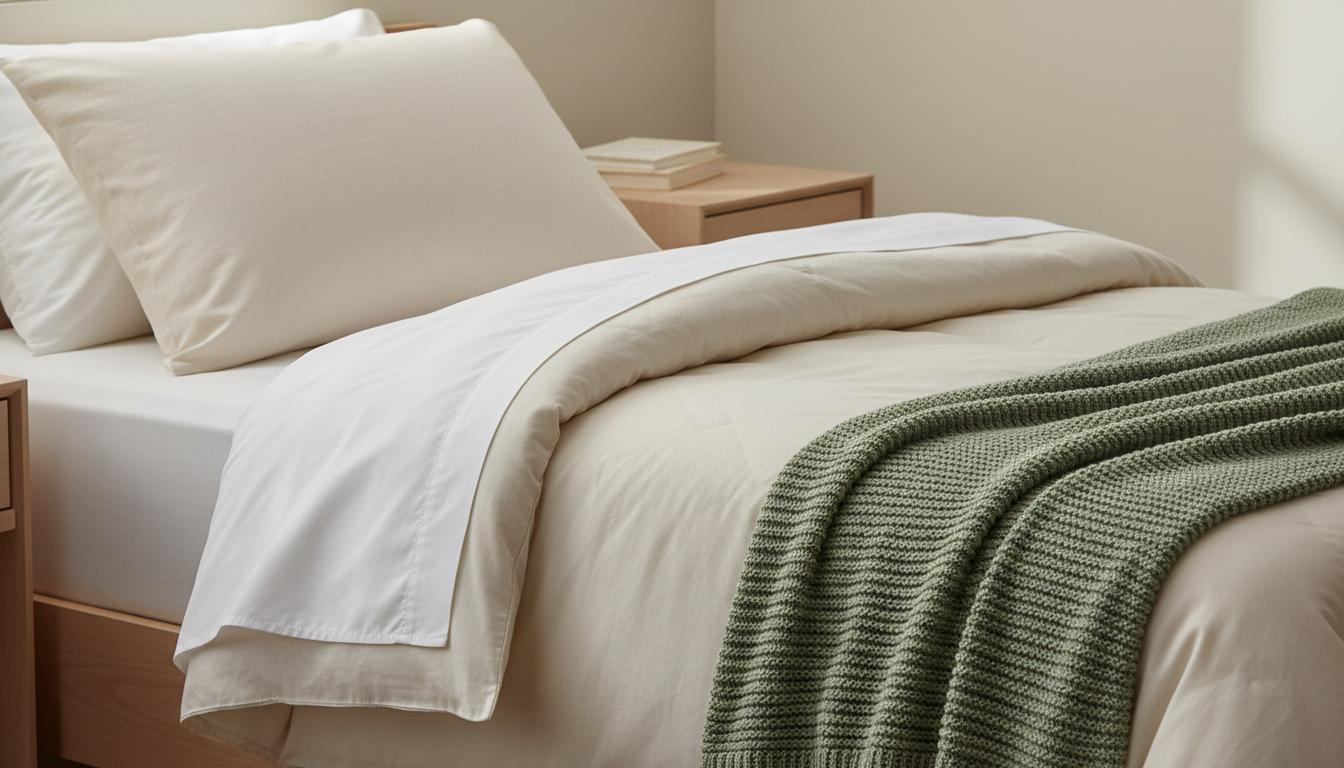
Dorm bedding is easier to choose when you separate fit from fabric. This guide focuses on materials, washability, temperature control, comforters, duvets, and thread count. For exact mattress dimensions, pocket depth, and size compatibility, use the separate Twin XL bedding fit guide.
Quick Answer
Choose dorm bedding according to sleep temperature and laundry habits, not an inflated thread-count number. Cotton percale is breathable, microfiber is easy-care and budget-friendly, and a washable duvet cover can simplify upkeep. For exact Twin XL dimensions and mattress depth, use the separate Twin XL fit guide.
Key Takeaways
• Fitted sheets, mattress protectors, and toppers should match the confirmed Twin XL mattress size.
• A 2-inch gel memory foam topper is the most important purchase.
• Cotton percale for hot sleepers, microfiber for easy care.
• Thread count between 200 and 400 is ideal. Above 400 is marketing.
• A full or queen comforter looks better on a Twin XL bed than a Twin XL comforter.
A Brief Twin XL Fit Check — Most college mattresses are Twin XL, but this article only covers the essential fit check: fitted sheets, protectors, and toppers must match the mattress dimensions and pocket depth. For a complete sizing table and fit guidance, read the Twin XL bedding fit guide.
Material: Cotton vs Microfiber vs Jersey — Cotton is breathable, gets softer with each wash, and regulates temperature well. Look for 100% long-staple cotton or cotton percale if you sleep hot. Microfiber is cheaper, wrinkle-resistant, and feels silky out of the package, but it traps heat — not ideal if your dorm has no air conditioning. Jersey knit feels like a soft t-shirt and is cozy, but it stretches and pills over time.
The Thread Count Myth — Anything between 200 and 400 thread count is perfectly fine for dorm sheets. Above 400, you are mostly paying for marketing. The quality of the cotton matters far more than the thread count. A 250-thread-count sheet made from Egyptian or Pima cotton will feel better than an 800-thread-count sheet made from cheap, short-staple cotton.
Mattress Toppers: The Non-Negotiable — Dorm mattresses are thin, firm, and have been slept on by dozens of students before you. A mattress topper is the single most important bedding purchase you will make. Look for 2 to 4 inches of gel-infused memory foam — it adds comfort without trapping heat. A good topper costs between $40 and $80 and will dramatically improve your sleep quality.
Pillows: Buy Two — Dorm beds look best with two standard-size sleeping pillows in pillowcases that match your sheets, plus one or two decorative throw pillows. The sleeping pillows provide structure behind the decorative ones. Do not skip the sleeping pillows and only buy throw pillows — the bed will look flat and unfinished.
Comforter vs Duvet: Which Is Better? — A comforter is a single piece — easier to wash, simpler to make the bed. A duvet is a comforter insert inside a removable cover — more versatile for changing styles, but harder to put together. For dorms, we recommend a comforter for simplicity, unless you specifically want the ability to swap duvet covers seasonally.
Common Bedding Shopping Mistakes
Buying regular Twin sheets
They will not fit. Twin XL is 5 inches longer. The sheet will pop off within two weeks.
Ignoring pocket depth
Dorm mattresses are thick, especially with a topper. Look for 12 to 16 inch deep pockets on fitted sheets.
Buying based on thread count alone
A 250-count Egyptian cotton sheet beats an 800-count cheap cotton sheet. Focus on material quality, not the number on the package.
Related Reading
• Twin XL Bedding Guide — Detailed sizing and fit guidance.
• Full/Queen Comforter on Twin XL — Why sizing up your comforter works.
• Best Twin XL Bedding — Curated product picks.